Dezhou Deqian HVAC Equipment Co., Ltd.



QS Steam Unit Heater
PRODUCT PARAMETERS
Installation, Use and Maintenance Instructions for the Unit Heater
(1) QS-type unit heaters can be hoisted or seat-mounted on structural members of the building (walls, columns, floor slabs, wooden trusses); see the installation diagram.
(2) When opening the packing box, be careful not to damage the unit heater and its paint layer with unpacking tools, and take out the accompanying documents in the box and keep them properly.
(3) During hoisting and transport, suspend the unit with steel cables through the lifting rings to prevent damage to the unit heater and its paint layer.
(4) Check the integrity of the unit heater before installation and wipe off the anti-rust grease.
(5) According to the heating medium selected for the radiator, the unit heater should be equipped with the corresponding water supply and drainage piping: the water inlet is at the top and the drain outlet at the bottom. Note that sealed ball valves should be installed on both the steam/hot water pipes and the return water pipes. When heating with steam, a condensate drain (steam trap) should be installed on the condensate pipe.
(6) The fan wiring should make the fan impeller rotate clockwise (viewed from the air inlet direction).
(7) Before using the unit heater, carefully check the tightening condition of all connections; if any looseness is found, tighten it immediately.
(8) During operation, check the sealing of the radiator and its supply/drain pipes and the flexibility of all adjustment devices, and handle any fault promptly.
(9) When steam is used as the heating medium, its pressure must be controlled within 0.03-0.6 MPa; overpressure use is strictly prohibited. When hot water is used as the heating medium, the water temperature is 70-130 degrees C.
(10) Before each operation, drain the cooling water and mixed gas in the radiator tubes, and start air supply after preheating for 5-10 minutes.
(11) After operation stops, drain the condensate in the radiator to prevent freezing. A small amount of hot medium can be allowed to circulate inside the radiator.
Description
FAQs
Request A Quote
Description
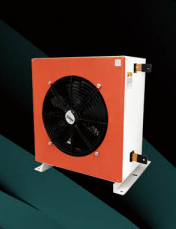
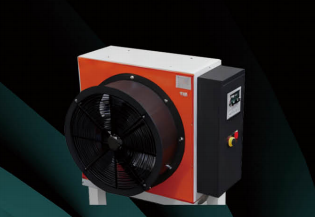
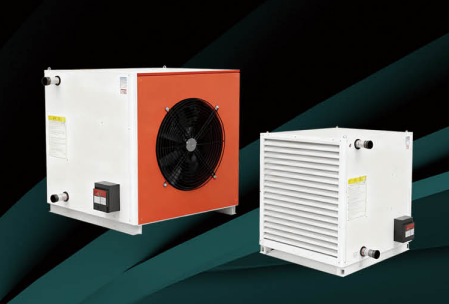
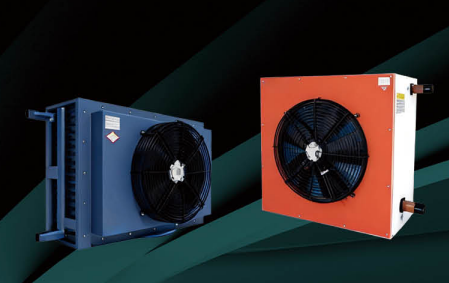
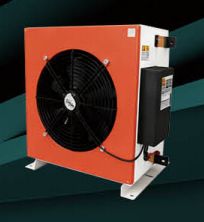
The QS-type unit heater uses steam as the heat source and adopts a top-in, bottom-out single-pass arrangement, which can discharge condensate in time, reducing the influence of condensate on heat transfer, greatly improving heat transfer performance and heat exchange efficiency, and saving energy. With steam as the heating medium, QS-type unit heaters are widely used for hot-air heating in industrial and mining enterprises, production workshops and other large buildings.
The radiator of the QS-type unit heater is composed of staggered spiral finned tube bundles. Using an advanced process, 0.4 mm x 10.5 mm aluminum strips are mechanically wound onto 20 mm seamless steel tubes, ensuring tight contact between the fins and the tubes, good heat transfer performance and corrosion resistance. This type of unit heater mainly consists of a radiator, a casing, a guard-covered fan, louvers, etc. The radiator has three/four rows of tubes; the heating medium enters through the pipe connection at the lower part of the first row. Heat is conducted through the tube wall to the fins on the outer surface of the steel tubes and exchanged with the air. The impeller is directly driven by the motor, forcing the air to flow through the fins outside the tube rows, where it gains heat and its temperature rises.
The Q-type unit heater is equipped with hoisting plates and floor connection plates for easy installation and fixing. The equipment runs smoothly and reliably, with low vibration and low power consumption. For different thermal performance requirements, refer to the specifications in the catalog.
FAQs
What does Dezhou Deqian manufacture?
We are a manufacturer of ventilation, air-conditioning, dust-removal and smoke-exhaust equipment. Our range covers fire smoke-exhaust fans, fire dampers and smoke-exhaust valves, aluminium air outlets and diffusers, ventilation ductwork and silencers, air-handling and fresh-air units, water tanks, cooling towers, seismic supports, and air-purification and kitchen oil-fume purification equipment.
Are your fire-protection products certified?
Yes. Our fire dampers, smoke-exhaust fire dampers, smoke-exhaust valves and fire smoke-exhaust fans carry CCCF (3C) certification. For every fire-protection product we can supply national-level fire test reports together with the complete CCCF documentation package.
What quality systems do you run?
The company is certified to ISO 9001 (quality), ISO 14001 (environmental) and ISO 45001 (occupational health and safety) management systems, and holds AAA-grade certificates as a quality-assured, contract-honouring enterprise.
What types of fans do you offer?
Our fan series includes CCCF axial fire smoke-exhaust fans, CCCF centrifugal fan boxes for fire service, pressurization supply fans, diagonal-flow fans, mixed-flow fans, axial fans, ceiling-mounted and floor-standing fresh-air ventilators, heat-recovery units, and finned-tube, rotary-wheel and heat-pipe air-handling units.
What dampers and air outlets are available?
Dampers: CCCF automatic fire dampers, CCCF automatic smoke-exhaust fire dampers, CCCF automatic smoke-exhaust valves, manual balancing dampers, non-return dampers, pressurization supply outlets, multi-blade outlets, and CCCF smoke-exhaust outlets. Aluminium outlets: spherical jet nozzles, swirl diffusers, ceiling diffusers, weatherproof louvers, and single/double-deflection louvers.